OVERVIEW
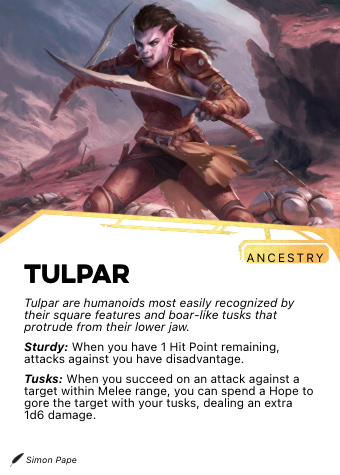
Tulpar (Orc) are not the savage raiders of traditional fantasy. They are a people defined by hard-won freedom, cosmopolitan diversity, and economic mastery. After 1,000 years of liberation from enslavement — roughly forty generations — Tulpar culture has evolved from survival to prosperity. Modern Tulpar are respected as master traders, diplomatic mediators, and cultural bridges across the Silk Road, while never forgetting the chains they once wore.
"We remember where we came from. We choose where we're going."
"Need a trade deal? Ask a Tulpar. Need a negotiator? Hire a Tulpar. Need someone who understands everyone? That's a Tulpar."
HISTORICAL CONTEXT
The Captivity Era
The exact duration of Tulpar captivity has been lost to oral tradition — centuries, at minimum. Scattered from one end of the Silk Road to the other, different Tulpar populations served different masters under different conditions. They were enslaved as laborers, miners, soldiers, builders. The absence of a single shared experience of captivity is why no two Tulpar clans are identical today.
The Liberation (~1,000 Years Ago)
The Tulpar were liberated prior to the fall of the first empire. The result was sudden, chaotic freedom without infrastructure or plan — decades of bloodshed, displacement, and desperate survival followed. Some thirty to forty percent of the liberated Tulpar died in the first decades. The chaos period produced the clan structures that still define Tulpar life: small, mobile communities anchored to geography and local alliances rather than any central authority.
The Flowering (Era 2: ~300 years)
What began as survival — selling seized weapons, offering guard services — became mastery. Over three centuries, Tulpar transitioned from martial specialists into economic powerhouses. Oral tradition was standardized; the Chain Chronicles were formalized. The first multi-style weapon schools were established. Tulpar merchant clans became recognized trading partners across the Silk Road.
The Consolidation (Era 3: ~300 years)
Tulpar trade confederations rivaled Kuhban banking houses. Diplomatic academies were established to teach negotiation, mediation, and cultural translation. Some Tulpar clans became the wealthiest families on the Silk Road. The first Tulpar council seats appeared in major city-states. This era is remembered as "the Trading Centuries" — when Tulpar perfected their reputation as economic masters.
The Modern Era
Tulpar are now integral to the Silk Road economy, not marginal survivors. They are known as "social lubricants" — facilitators of difficult negotiations who translate not just languages but customs, expectations, and unspoken rules. They carry ancestral memory of the chains alongside real, present power.
CULTURAL CHARACTERISTICS
Clan-Based Identity
Clan over ancestry. A Tulpar's clan identity tells their story — where they settled, who helped them, what they learned. Clan names reflect this: settlement-based ("Stoneback Clan," "Sandstrider Clan"), alliance-based ("Dao-Sworn," "Steppe-Brothers"), memorial-based ("Chainbreakers," "Iron-Remembers"), or trade-based ("Silk-Weavers," "Steel-Sellers").
No two Tulpar clans are identical. Each developed unique traditions based on their post-liberation experiences.
Cosmopolitan Adaptation
"We take what works. We honor where it came from."
Tulpar are culturally acquisitive without being appropriative — they adopt practices, weapons, languages, and customs from peoples who helped them or whom they respected, but always acknowledge the source. Persian diaspora clans speak Farsi and fight with shamshirs. Mountain clans learned Afghan combat techniques. Chinese settlement clans celebrate Lunar New Year alongside Tulpar remembrance days.
The Martial Tradition
"Every blade has a story. Every story has a lesson."
Tulpar are weapon-agnostic, seeing martial diversity as strength. A Tulpar warband carrying ten different weapon types is not disorganized — it is a statement of clan histories and hard-won knowledge. Young Tulpar learn multiple weapon styles; clan weapon-masters teach techniques from three to six different traditions. The "weapon-walk" custom sends young Tulpar on years-long journeys to learn fighting styles from other clans and cultures.
Major Tulpar settlements maintain multi-style training grounds open to non-Tulpar for fee or service. The famous "Hundred Stances School" teaches twelve or more weapon traditions. In modern times, these academies are often paired with or overshadowed by the diplomatic schools — more young Tulpar apprentice to Bondkeepers than Bladespeakers.
Language and Literacy
Most Tulpar speak multiple languages: Tulpari (the original language, preserved through oral tradition), Trade Common (the Silk Road lingua franca), and the regional language of wherever their clan settled. Literacy rates are higher than might be expected — many Tulpar learned to read during captivity or post-liberation through trade and contracts.
Written clan histories recording migration, allies, enemies, fallen, and learned wisdom. After 1,000 years, these chronicles are some of the most comprehensive historical records on the Silk Road, rivaling Kuhban archives in scope.
THE TRADING CENTURIES: ECONOMIC MASTERY
From Warriors to Merchants
The transition was not sudden. Weapon diversity became market advantage — "any blade from any culture" was a niche no competitor could match. Cultural mediation became diplomatic services, as multilingual, multicultural Tulpar clans translated customs, not just words. Trade networks formalized into merchant leagues, with standardized contracts and credit systems honored across regions. Economic power eventually translated into political representation.
Modern Economic Role
Tulpar facilitate deals between parties who distrust each other. Multilingual, multicultural, and with a reputation for fairness, they are called in for major trade deals that other brokers cannot close.
Tulpar negotiators end disputes that have dragged on for generations. They are known as social lubricants — people who understand what all parties actually want, not just what they say they want.
The most comprehensive weapon dealers on the Silk Road, with 1,000 years of accumulated expertise across cultures. Every major city has a Tulpar weapon quarter.
Tulpar clan ties span continents. Everyone talks to their Tulpar trader. Market trends and political shifts are fair game; secrets that endanger individuals are not.
Being banned from Tulpar trading networks is economic death for merchants. The threat is more effective than any court — and it is rarely an idle one.
Merchant Leagues
Loose confederations of allied Tulpar clans, organized regionally with no central authority. The Golden Chain League covers the western regions (luxury goods, diplomatic services). The Steppe Compact handles Central Asian caravan logistics. The Jade Road Brotherhood manages bulk goods in the east. The Southern Confederacy mediates the spice and textile trades.
All leagues maintain shared ledgers of trustworthy and untrustworthy traders, standardized contracts, credit networks honored league-wide, and arbitration courts for commercial disputes.
"The Tulpar always gets their percentage" — not through violence, but through economic leverage. Non-payment gets you blacklisted everywhere. Other merchants follow the Tulpar lead. The reputation for fairness plus ruthless enforcement means voluntary compliance is the norm.
DIPLOMATIC ACADEMIES
Philosophical Foundation
"To negotiate well, you must understand what your opponent values — and what they fear to lose."
Tulpar diplomatic training emphasizes cultural intelligence (deep knowledge of multiple societies' customs and taboos), active listening (hearing what is not said), strategic empathy (understanding perspectives without agreeing with them), and creative problem-solving (finding solutions that give everyone something they need).
Major Academies
The premier Tulpar diplomatic academy. Trains negotiators, mediators, and cultural translators through a three-to-five year intensive program: language immersion, cultural embed, negotiation theory, apprenticeship. Graduates are highly sought after by kingdoms, merchant houses, and religious organizations. Non-Tulpar students are accepted but rare — the program is expensive, rigorous, and culturally demanding.
Specializes in arbitration and contract law. Trains judges, arbitrators, and legal scholars. Maintains archives of precedent-setting commercial cases and publishes annual legal commentaries influential across the Silk Road.
Most major Tulpar clans run smaller programs focused on practical bargaining, deal-making, and reading people. Less prestigious, more accessible. "Every Tulpar child learns to negotiate before they learn to fight."
Diplomatic Techniques
Never conclude serious negotiations at the first meeting. The first cup establishes positions and builds rapport. The second cup explores interests and tests boundaries. The third cup closes and formalizes. Anyone pushing for immediate agreement is hiding something.
When parties are deadlocked, the Tulpar mediator proposes a solution privately to each side. If both accept, the deal is done. If either rejects, the mediator revises. Neither party ever has to admit compromise publicly.
Most conflicts are not zero-sum if you understand what people actually want. One party values prestige; the other values practical control. Split accordingly.
SOCIAL STRUCTURE
Clan Hierarchy
Elected, not hereditary. Must demonstrate both martial and economic capability in the modern era. Can be challenged through formal duel or clan vote. Serves until death, retirement, or removal.
Manages clan relationships with other clans, merchant leagues, and foreign powers. Negotiates major contracts. Trains young Tulpar in bargaining, diplomacy, and cultural intelligence. In prosperous clans, often more influential than the Bladespeaker. The symbolic "keeper of living chains" — the bonds that connect the clan to the world.
Teaches martial traditions, preserves weapon histories, serves as war-leader when conflicts arise. High status, respected across clan boundaries. Once the most prestigious role; now shares standing with the Bondkeeper.
Maintains oral and written histories. Performs liberation anniversary ceremonies. Counsels on tradition versus adaptation. Ensures younger generations know where they came from. The Bondkeeper keeps bonds of the present; the Remembrancer keeps bonds of the past.
Advises the Thrakmar/Thrakmara, represents clan families and factions, settles internal disputes. Modern councils usually include at least one former Bondkeeper and one former Bladespeaker.
Inter-Clan Relations
Tulpar generally cooperate — they recognize shared history, offer mutual aid, share weapon techniques, and intermarry freely. Tensions arise around the assimilationist versus preservationist debate, settlement versus nomadic lifestyle preferences, and competition for trade dominance within the merchant leagues. Major inter-clan gatherings occur every ten years for shared histories, dispute resolution, arranged marriages, weapon competitions, and a Remembrance Vigil for those who died in captivity and the chaos period.
Family Structure
Biological family comes first, chosen family close behind. Tulpar extend kinship generously to adopted clan members, long-term trade partners, those who share struggles, and anyone who demonstrates reverence for Tulpar ways. Adopted children are treated identically to biological children. Orphans are automatically absorbed by the clan. "It takes a clan to raise a child."
Coming-of-age typically occurs around sixteen to eighteen. Young Tulpar choose their path — weapon-master, trader, craftsperson, mediator — and may undertake a Weapon-Walk (travel to learn fighting styles from other clans), a Trade-Walk (apprenticeship with distant merchant houses), or a Remembrance Pilgrimage (visiting sites of historical significance).
RELIGIOUS AND SPIRITUAL PRACTICES
Tulpar have no unified religion. Different clans adopted different spiritual practices based on where they settled — some worship local deities, others practice regional folk religions, some maintain fragmentary pre-captivity animist traditions.
Nearly universal. Honor those who survived captivity, died fighting for freedom, or built new lives.
Not a celebration — a solemn remembrance. Lighting of chains (symbolic breaking), recitation of the fallen, renewal of freedom oaths specific to each clan.
Some Tulpar carry "Breaker's Chains" (weaponized shackles), mining picks, or tools from the captivity era. Rarely used in combat — their significance is ceremonial. "To remember the weight we carried, so we never forget why we're free."
ECONOMIC ROLES
The most cosmopolitan weapon dealers on the Silk Road. Any blade, any culture, any style — sold, forged, repaired, appraised, or taught. "Need a blade? What style? We know them all."
Multi-style combat training, familiarity with diverse threats, and a reputation for loyalty once contracted make Tulpar guards highly sought for Silk Road caravans, pilgrim escorts, and diplomatic missions.
Many Tulpar retain skills from the captivity era — mining, stonework, metalworking, construction, engineering. The relationship is complicated: these skills carry painful memories but provide livelihood. Most Tulpar prefer working for themselves.
Younger generations are establishing their own trade networks in weapons, regional specialties, and cross-cultural trade facilitation.
RELATIONS WITH OTHER ANCESTRIES
The most complex relationship. Humans were both captors and liberators, enemies and allies. Varies by region and clan history. The tension is real but not universal — case by case.
Generally positive. Shared respect for craftsmanship, some trade partnerships combining Tulpar weapon diversity with Kuhban engineering, and mutual appreciation for remembering where you came from.
Friendly. Rahban's welcoming nature appeals to scattered Tulpar diaspora. Trade relationships are common; some intermarriage, rare but accepted.
Respectful distance. Tulpar admire Vaghri martial prowess; limited interaction due to different settlement patterns; occasional weapon technique exchanges.
Kinship. Both ancestries marginalized, scrappy, adaptive. Some regional alliances, shared pragmatism.
Complicated. Some Tulpar see Div-Born as "branded like we were" — sympathetic. Others are wary of the demonic associations. Varies by individual more than clan.
Neutral to positive. Limited interaction due to settlement patterns, no historical baggage, trade and occasional cooperation.
Wary respect. Drakona's power reminds some Tulpar of powerful captors; others admire their strength. Generally keep distance unless allied.
"FOUND FAMILY": TULPAR KINSHIP PHILOSOPHY
"Blood remembers, but choice honors."
Tulpar understand kinship as concentric circles: biological family, clan family (blood and adopted), long-term trade partners who become familial, those who share the weight of hardship, and those who demonstrate reverence for Tulpar ways.
Tulpar are among the most welcoming peoples for those who show need, reverence, shared circumstance, or proven loyalty. Non-Tulpar can be formally adopted through sponsorship by an existing member, a trial period of six months to two years, demonstrated commitment, a formal ceremony, and name-giving. Adopted members gain full clan protection, access to trade networks, a voice in clan decisions — and the obligation to support others and honor traditions.
Half-Tulpar children of mixed marriages are never considered lesser. Same for anyone else adopted in. "You are what you carry" — identity is what burdens you shoulder, what you protect, what you honor.
PLAYER CHARACTER HOOKS
Questions for a Tulpar (Orc) PC
1. Which clan are you from, and what is their signature weapon tradition? The clan tells your story. The weapon tradition tells what your ancestors learned, and from whom.
2. How does your clan remember the liberation — with pride, with sorrow, or both? Every Tulpar carries this. The answer shapes how they see everything else.
3. What did you learn during your weapon-walk or trade-walk, and from whom? The journeys of young Tulpar produce most of the interesting encounters and debts that follow them into adulthood.